



The first meeting of the Committee on Resource Palaeogeography of the International Society of Palaeogeography was held in Daqing, Heilongjiang Province
 81
81On January 14, 2026, the inaugural meeting of the Committee on Resource Palaeogeography of the International Society of Palaeogeography was successfully held in Daqing, Heilongjiang Province, China. The meeting was chaired by Professor Xuefeng Bai, Vice Chairperson of the Committee and Deputy General Manager of Daqing Oilfield Co., Ltd.
Among the attendees were Academician Longde Sun, Chairperson of the Committee on Resource Palaeogeography; Professor Shenghe Wu, President of the International Society of Palaeogeography and professor at China University of Petroleum (Beijing); Mr. Fenghe Liu, General Manager of Daqing Oilfield Co., Ltd.; Mr. Kun Sun, Executive Vice Mayor of Daqing City, and 31 committee members and representatives from universities, research institutes, and enterprises both in China and abroad. The Committee Secretariat, as its Standing body, has been established in Daqing Oilfield Co., Ltd.
The meeting focused on innovations and advancements in resource palaeogeography, aiming to support global resource exploration and energy security. Participants engaged in discussions on disciplinary development, future directions, and collaborative mechanisms for resource palaeogeography.
Professor Shenghe Wu pointed out in his address that resource palaeogeography serves as a key role linking geological history with resource exploration, playing a cornerstone role in mineral prediction and energy security. He proposed three recommendations: deepening academic innovation to build a theoretical system with an international perspective; promoting global collaboration among industry, academia, research, and application, with a focus on cultivating young talents; and formulating a clear, actionable development blueprint to advance the long-term growth of the discipline.
Mr. Fenghe Liu emphasized that resource Palaeogeography provides critical guidance for unconventional oil and gas exploration. He stated that the oilfield company would commit its full support to the committee's work, accelerating the transformation of paleogeographic research findings into exploration practices, and helping establish a pioneering hub for original technologies.
Mr. Kun Sun stressed in his address that Daqing, as a resource-based city, will provide a solid practical platform and full-service support to the committee. He expressed his hope that experts would contribute scientific insights and expertise to assist in urban resource assessment and promote green development initiatives.
During the meeting, Professor Rukai Zhu, Deputy Director of the Committee, delivered a report titled Current Status and Prospects of Resource Paleogeology. In his presentation, he described the disciplinary positioning of resource palaeogeology as a vital branch of palaeogeology and proposed key interdisciplinary research directions. These include the interaction between Earth's spheres and resource palaeogeology, Palaeogeography of sedimentary basins and multi-resource synergy, shale Palaeogeography and hydrocarbon enrichment, coal-measure Palaeogeography and hydrocarbon accumulation, Palaeogeography and geological CO₂ storage, Palaeogeography and subsurface special spaces, as well as the integration of resource paleogeology with AI and nanotechnologies. Professor Dali Yue, also Deputy Director of the Committee, reported on the development framework and the 2026 work plan of the Committee. He clarified the organizational structure, core responsibilities, and annual tasks of the Committee.
During the discussion session, participating members engaged in in-depth exchanges on topics including the disciplinary positioning, optimization of research directions, international cooperation, cultivation of young talents, and industry-academia-research integration. Multiple constructive suggestions were put forward. It was particularly highlighted that compiling the inaugural Resource Paleogeographic Map would serve as a key focus and a milestone achievement for the work in the upcoming period.
In his concluding remarks, Academician Longde Sun emphasized that the Committee on Resource Palaeogeology bears the vital mission of driving disciplinary innovation and advancing international collaboration. He stated that the Committee should leverage its role as an international academic platform, refine the disciplinary framework, actively organize and participate in the 7th International Conference of Paleogeology, and steadily advance initiatives such as academic lectures, public outreach activities, and the institutional solidification of the secretariat. He called upon all members to uphold the "Daqing Spirit"—characterized by relentless exploration and determined problem-solving—to jointly ensure a strong and effective start for the Committee's work, thereby contributing wisdom and strength to global resource exploration and energy security.
This meeting marks the official launch of the work of the Committee on Resource Palaeogeography. The Committee will bring global expertise together to advance theoretical innovation and practical applications in resource palaeogeography, actively contributing to global resource exploration and energy security.
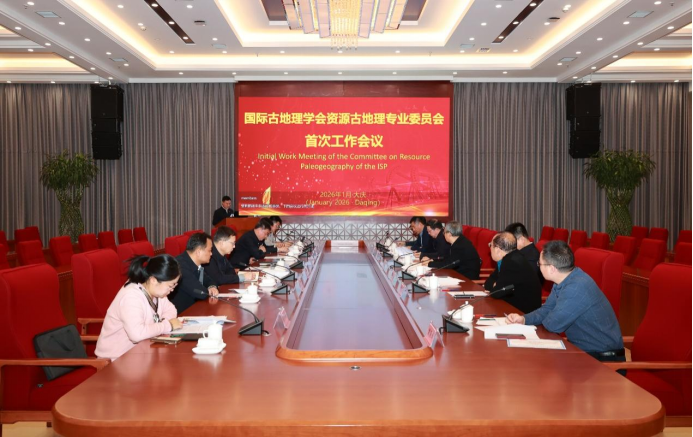
The first meeting of the Committee on Resource Palaeogeography of the International Society of Palaeogeography

Xuefeng Bai, Deputy Director of the Committee, General Manager, hosted the meeting
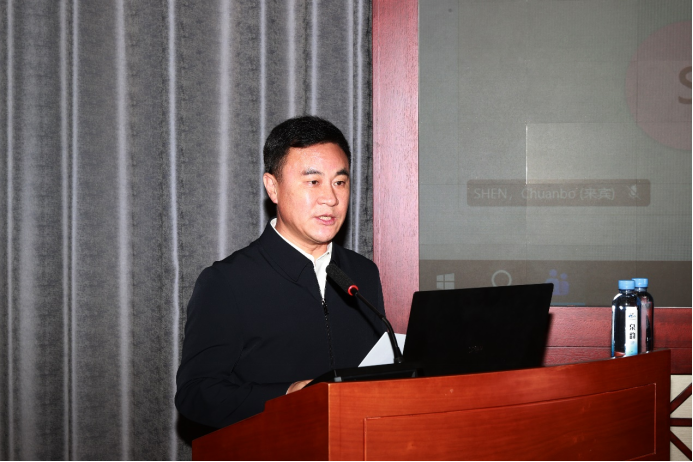
Address by Fenghe Liu, General Manager of Daqing Oilfield Company
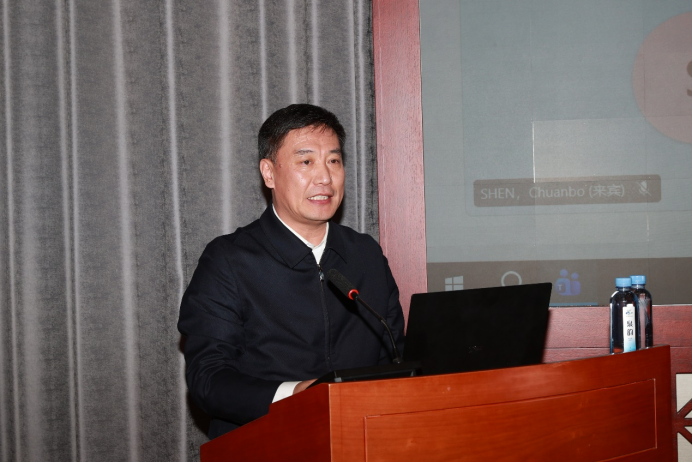
Speech by Kun Sun , Standing Committee Member of Daqing Municipal Committee and Deputy Mayor

Report by Professor Rukai Zhu, Deputy Director of the Committee
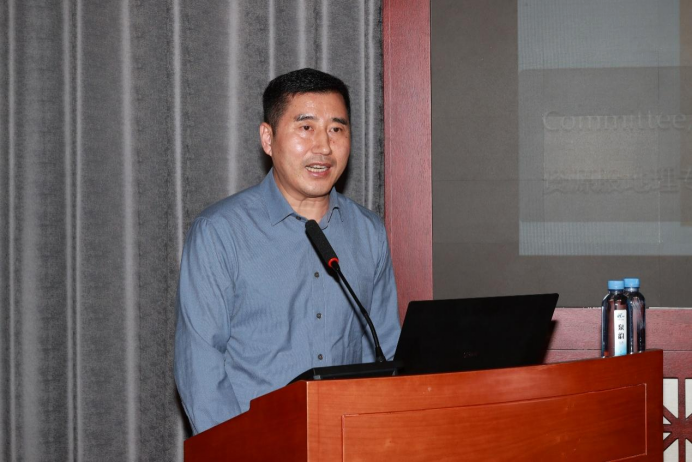
Report by Professor Dali Yue, Deputy Director of the Committee

Concluding speech by Chairperson, Academician Longde Sun
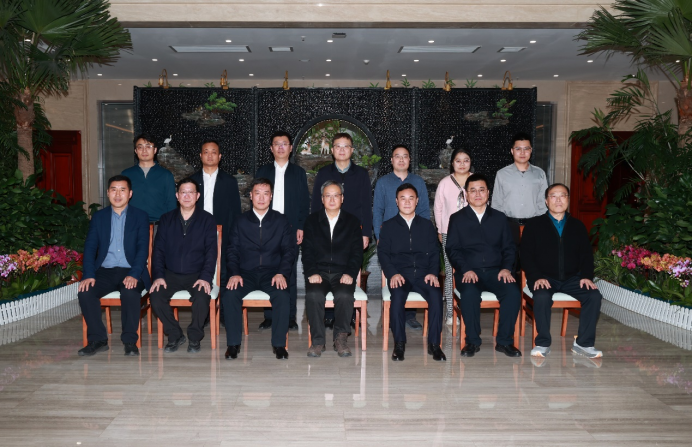
Group Photo of Some Committee Members


